What’s Your Fortune?


At the Annual Conference on the First-Year Experience, I picked up some great classroom activities from Loriann Irving, of Kutztown University. Loriann has built a creative portfolio of interactive exercises for use in her first-year seminar course.


She shared this activity for test or assignment review titled Fortunate Questions. Supplies needed include strips of paper (large enough for writing) and individual fortune cookies from the Asian foods aisle at your grocery or a specialty foods store.

Provide each student with a fortune cookie and strip of paper. Highlighting a textbook chapter, article, or other project, ask students to review pages or portions of recent assignments that will be on the next exam or are important in the course. Request that they write questions on the strips of paper. Collect the fortune papers in a basket, mix them up, then have students draw one from the basket. In a go-round, ask students to read the question they have selected and respond for the class.

Self-handicapping behaviors of college students

This NY Times article indicates that ego protection and lowered expectations are the reason some college students protect their failures through a behavior called self-handicapping. Using and creating excuses for poor academic performance allows students to plan for and evade success. If unchallenged, self-handicapping behaviors frequently carry over into the workplace, stereotyping individuals early in their careers. This is a great reference for students needing to take responsibility in their college education. Read more at The Student Affairs Blog.


End-of-the-year Bonus


At the final semester banquet for our student leaders, lots of fun stories and jokes from throughout the past year were shared. These students were part of a year-long program of leadership and development training that includes first-year seminar course facilitation in the fall semester. 


As we were enjoying dessert, one of our seniors, Adam, mentioned that in his last class he shared with his students that I was the reason he was still in college. His co-leader, Kelsey, chimed in that Adam had indeed given a presentation on how he had made it through college with my help. Curious as to the reasoning, I asked Adam how I was of influence. 

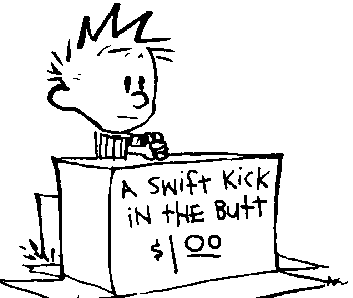
“You kicked my butt. And you didn’t stop kicking my butt until I straightened out.”


You see, Adam had a little difficulty with academic focus early on in his college career. We spent many an afternoon chatting about goals, grades, and graduation and why his current choices were not getting him closer to any of them. Eventually, Adam got it figured out. This year he is president of the academic club in his major in addition to serving as a peer mentor in our program. He will graduate in May.

And that is why I do what I do. The financial rewards in higher education will never rival CEO pay. Our hours are crazy, we don’t travel in private jets, and the temperature control in our buildings never seems to coincide with the season. But every once in a while, we get these little gems of appreciation from students that remind us that we touch lives. And kick butt. Which makes for a pretty nice end-of-the-year bonus in my book.


Constructive Criticism: Wisdom from The Last Lecture

For their midterm assessment, our peer mentors in the first-year seminar were asked to provide a class presentation on the topic of their choice. The presentations were reviewed by our staff and also their peers in the leadership course. We completed half of the presentations last week and collected evaluations. Most were ambiguous praise such as “Great job!” and “Nice Powerpoint!”. As a preface to the presentations this week, my graduate assistant offered this gem of wisdom from Randy Pausch’s The Last Lecture.

When you are doing something badly and no one’s bothering to tell you anymore, that’s a very bad place to be. Your critics are the ones still telling you they love you and care.

It was evident from their demeanor and the significant increase in writing on the review forms that our peer leaders took these words to heart and began to show the love. Much of the feedback continued to be positive, but comments were more direct and offered suggestions for improvement.

Pausch asked the question of what wisdom would we impart if we knew it were our last chance. I continue to find wonderful lessons in his writings and explore their opportunity for my first-year seminar and other student programming. Pausch wrote his book to share a bit of himself with his children, but I think he would be pleased that his message has application in student development, particularly leadership, as discussed over at The Student Leader Blog.

What is your favorite lesson or idea from The Last Lecture?
How are you incorporating The Last Lecture into your curriculum?