Future Earnings

As a student affairs professional and higher education advocate, I am exhausted by recent events discounting the value of a college degree. Yes, I am looking at you, Mr. Stanford Educated Peter Thiel. Thankfully, there are enough critical thinkers in the media who are willing to defend the value of education from stories such as:  Debt-Laden Graduates Wonder Why They Bothered With College.

Why the Media is Always Wrong About the Value of a College Degree

The Long, Sad History Of ‘College Not Worth It Anymore’ Articles

Does College Still Pay?

And my logical thinking favorite:

Where is the Best Place to Invest $102,000–In Stocks, Bonds, or a College Degree?

…the recession has not fundamentally changed the math: although a college degree has upfront costs, it is important to remember that it is an investment that pays off over time.

Throwing Rochambeau and logical thinking

Breanne Harris posted this gem at her Critical Thinkers blog and it made me laugh out loud on a day filled with the grumbling of a final research paper. I am posting the text here to remind myself that there is nothing wrong with my logical ENTJ thinking processes.

Let’s throw for it.

I understand that Scissors can beat Paper, and I get how Rock can beat Scissors, but there’s no way Paper can beat Rock. Paper is supposed to magically wrap around Rock leaving it immobile? Why can’t Paper do this to Scissors? Screw Scissors, why can’t Paper do this to people? Why aren’t sheets of college-ruled notebook paper constantly suffocating students as they attempt to take notes in class? I’ll tell you why, because Paper can’t beat anybody, a Rock would tear it up in two seconds. When I play Rock Paper Scissors, I always choose Rock. Then when somebody claims to have beaten me with their Paper, I can punch them in the face with my already clenched fist and say, “Oh sorry, I thought paper would protect you.”

Success tips for First-Year Students

Contributing writer Erin Leitner with the News Record of the University of Cincinnati came up with 7 Tips for First-year Students to Succeed.  She included wisdom on not stressing over choosing a major.

Don’t stress about picking a major your first year or two. Just because some people know exactly what they want to do from the start doesn’t mean you have to narrow your frame of mind, too.

In your first year or so, take your time and search for your niche. My advice is take classes that you think you may like or think you are good at. If you find that you enjoy them and do well in them naturally then you may be on to something.

Also, try to ask people you admire about their careers and emulate their advice into your life. Don’t limit yourself to just local acquaintances or professors, but don’t ignore them either. Try to contact those unreachable-possible-celebrities whose work might inspire you. They may not answer you, but if they do you will have some golden inspiration.

You could also try to reach the people who directly surround your idol. They are likely the backbone of the individual you are seeking advice from and are usually equally talented and knowledgeable about the career path you are exploring.

I recall switching my undergraduate major during the first and second college year, staying within the same academic department, but choosing a different direction. With the exception of pre-professional programs in architecture and perhaps engineering on my campus, students have the flexibility to give courses a test-drive before committing to a program of study. I counsel students and families that not every 18-year old is ready to declare what they will be doing for the next forty years. Being undecided about a major is not a negative, it’s the active process of making a decision.

Baby you’re a firework

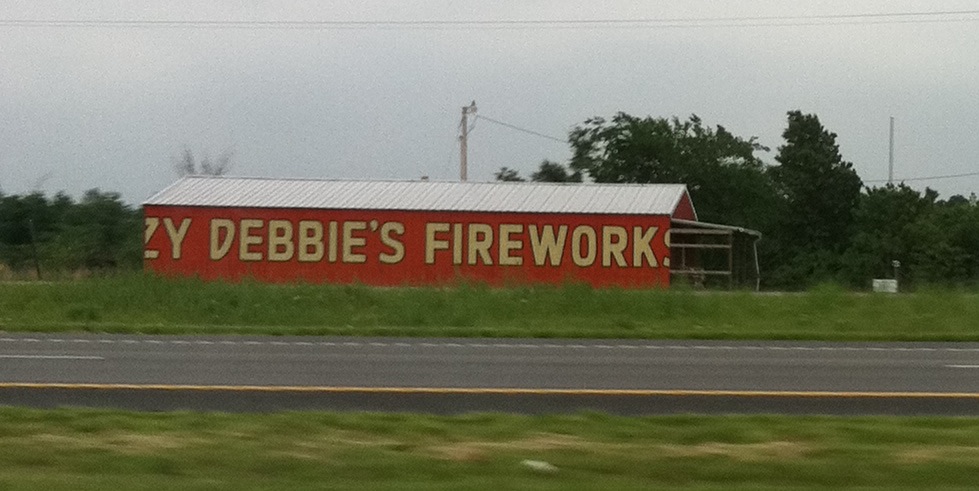
New from the If this student affairs gig doesn’t work out files. Passed this building on Highway 71 somewhere south of Kansas City. Photo taken at a speed of approximately 80 mph. Leaning across the driver of the vehicle. If you look closely, it appears the original name of this pyrotechnic establishment was “Crazy Debbie’s Fireworks”. What the photo does not show you is that the north end of building has been blown out and a semi-trailer near the building was toppled over with apparent fire damage.

Never play with firecrackers.

Set Phasers to Stun

Our family just returned from a visit to my in-law’s home near an artist community in northwest Arkansas.

After enjoying a wonderful afternoon of shopping and a delicious meal at a local restaurant, our crew stopped by the grocery to grab a gallon of milk while the grandparents, who had driven separately, headed home to unlock the house.

I ran into the store and quickly dashed out with milk in a paper sack and wallet in hand. As I approached our car, the bag disintegrated, the milk and my wallet went bouncing across the parking lot, and dollar bills went flying with the wind. Doubled over in giggles I looked to my family for help, but they were laughing even harder. I ignored them and the other shoppers playing witness to my clumsiness and rushed around to gather the milk and my money. As I jumped in our car, none of us could speak or breathe as we were brought to tears with the hilarity of the situation. They finally explained that at precisely the moment my grocery sack collapsed, my son had shot me with his new gift from grandma, a Cosmic Blaster.

Safe for children ages 3 years and older. Dangerous for mothers who forbid their sons from using them in the car.

Choose another street

I enjoy finding forgotten resources while organizing my computer files on a rainy Friday afternoon.

AUTOBIOGRAPHY IN
FIVE SHORT CHAPTERS
_________________________________

From There’s a Hole in My Sidewalk
By Portia Nelson

I.
I walk down the street.
There is a deep hole in the sidewalk.
I fall in.
I am lost … I am helpless.
It isn’t my fault.
It takes forever to find a way out.

II.
I walk down the same street.
There’s a deep hole in the sidewalk.
I pretend I don’t see it
I fall in again.
I can’t believe I am in the same place.
But it isn’t my fault.
It still takes a long time to get out.

III.
I walk down the same street.
There is a deep hole in the sidewalk.
I see it is there.
I still fall in. It’s a habit.
My eyes are open.
I know where I am.
It is my fault. I get out immediately.

IV.
I walk down the same street.
There is a deep hole in the sidewalk.
I walk around it.

V.
I walk down another street.

Decisions

No trumpets sound when the important decisions of our lives are made. Destiny is made known silently. ~Agnes de Mille

Some weeks in student affairs you make decisions that change students lives. Enrollment decisions, financial decisions, leadership decisions; decisions that have impact and meaning.

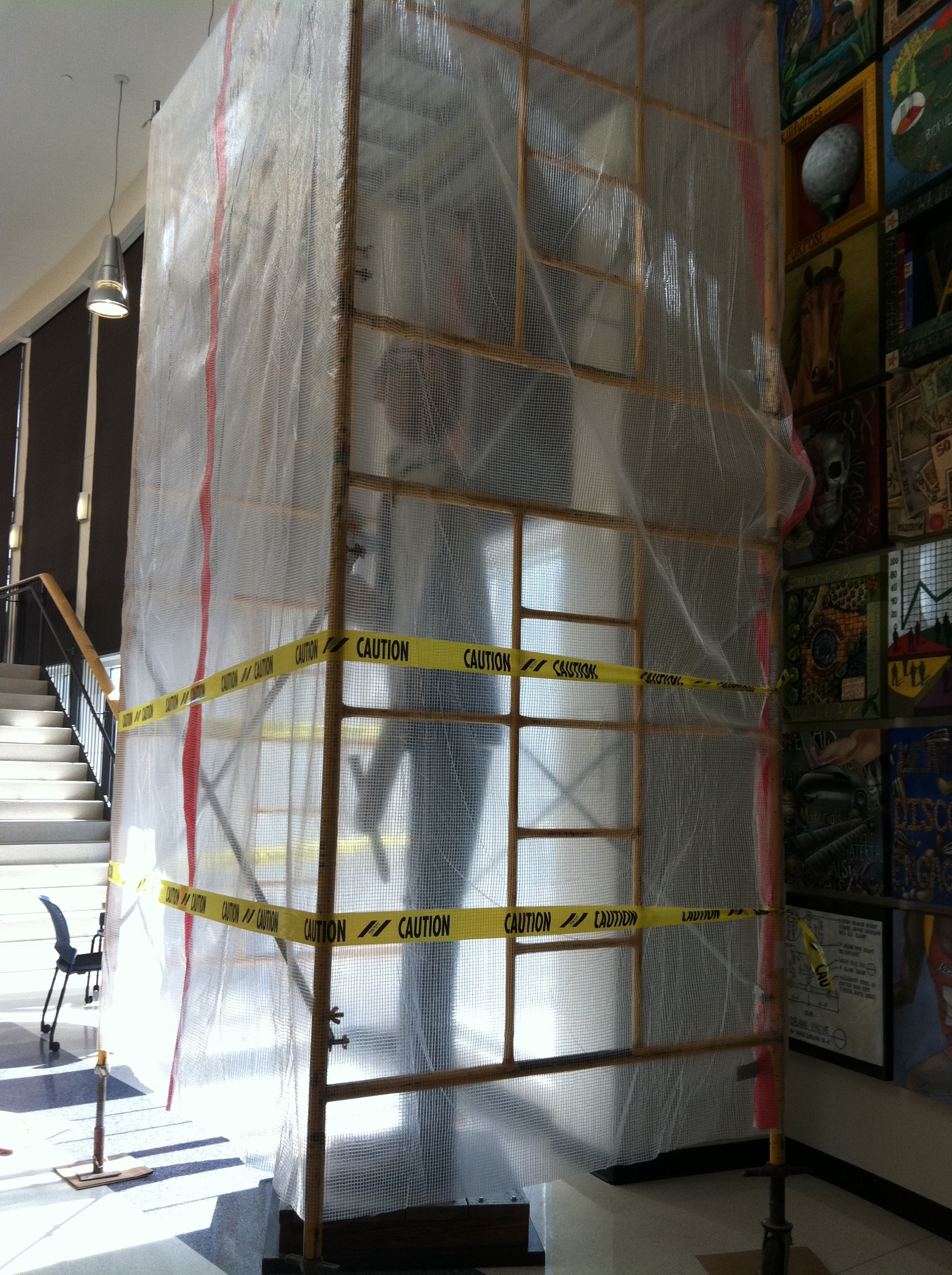
Other weeks, you decide whether the construction crew repairing your building will do more damage moving a twelve-foot tall, one-half ton wooden sculpture or building a safety barrier around it with scaffolding and bubble wrap.

It all evens out.

Judges 4

The folks at LinkedIn did a bit of data mining of the most popular first names among female CEOs. Deborah and Debra came in at #1 and #3, and both are Hebrew for “The Bee” or “Industrious one”. No surprise, Debra is my preferred spelling.

Deborah, in the Bible, was a prophetess, and the only female judge. She was a quite the busy leader, taking soldiers to the top of Mount Tabor to free her people.

You want to see industrious? Try April in student affairs.

Student Debt continued: Still no caviar

I have frequently referenced a paper for a higher ed finance class this semester that was featured today in a Los Angeles Times article on the big picture of student debt.

The Institute for Higher Education Policy study of federal student loans, Delinquency: The Untold Story of Student Loan Borrowing, suggests that a majority of students struggle to repay their loans.  As the cost of a higher education has increased exponentially over the last couple of decades, policymakers have relied solely on default rates as a measurement tool.  An institution’s default rates can impact their ability to provide loan borrowing to students.  This study suggests that default rates alone provide an incomplete analysis, as they exclude borrowers who have difficulty repaying their loans but who avoid default.

This study consists of a review of federal student loans only, not private lending.  It focuses on the nearly 1.8 million borrowers who entered into repayment on loans obtained through the Federal Family Education Loan Program in 2005 during their first five years of repayment.  It details the rates at which borrowers entered into default; into deferment, a temporary suspension of loan payments for re-enrollment in school, unemployment, or economic hardship; forbearance, temporary suspensions of a borrower’s payments because of financial difficulty; and delinquency, or late payment on a loan.

Overall, only 37 percent of the borrowers in the study managed to repay their student loans throughout the study period without postponing payments or becoming delinquent. Another seven percent entered into deferment because they re-enrolled in school.  A majority, 56 percent of borrowers, had difficulty making timely payments on their loans.

Of the 56 percent with repayment difficulty, 15 percent of borrowers used deferment and forbearance to postpone their payments and avoid delinquency.  Overall, 41 percent of the student loan borrowers became delinquent or defaulted.  Twenty-six percent of borrowers became delinquent, but did not default.  Approximately 15 percent of borrowers became delinquent and defaulted.

Delinquency and default have serious consequences for student loan borrowers and can affect credit scores and the ability to obtain mortgages and auto loans, and the terms upon which those loans are offered.  Borrowers who default face even more severe consequences, including wage garnishment, withholding of income tax refunds or Social Security benefits, the turning over of the defaulted loans to collection agencies, and liability for collection and court costs.

There were important distinctions made between borrowers.  Undergraduate and graduate borrowers who left school without graduating were far more likely to become delinquent or default than those who graduated.  Graduate students were far more likely to make timely payments without using deferment or forbearance and less likely to become delinquent or to default than undergraduates.  Students at public four-year and private, nonprofit four-year institutions were more likely to repay their loans on time without resorting to deferment or forbearance and less likely to default on loans.  Students at public and for-profit two-year institutions and for-profit four-year institutions were the most likely to experience repayment difficulty.