
Volume 2 of the “It’s nice to know that I have something to fall back on if this Student Affairs gig does not work out.”
 A student of mine missed class last week. After some checking, I found that a family emergency resulted in his missing at least two days of classes. And this was just the second week of the semester.
Lynn O’Shaughnessy discussed the phenomenon of students voluntarily missing class and featured the Skip Class Calculator on her blog. The calculator helps a student determine the cost of missing a class based upon class meetings per week, attendance history, and upcoming exams. A cursory glance at the Skip Class tool found one factor missing; the money invested in missing a class.
Running an estimate based on the full-time cost of attendance at our university, an in-state resident student invests $53 to attend an hour of class. For non-resident students, the amount increases to $86 an hour. Miss 10% of classes for a semester and a student can easily waste a grand or more.
At an institution where student loan debt at graduation is among the highest in the nation and as electronic course attendance systems become commonplace on college campuses, skipping class is pouring money down the drain.

There is an amusement park near my home that has one of those lose your lunch inducing rides that spin faster and faster until the floor drops out. It leaves you stuck to the wall until the ride slows and you gradually resume your footing on solid ground. The science of this phenomenon is centrifugal inertial force.
I never expect to see perfect work from an imperfect man. ~Alexander Hamilton

Jacques Steinberg shared gems of wisdom for soon-to-be first-year college students in The Choice column with Advice on the Transition From Applicant to College Student. It included a recommendation from my friend, W. Houston Dougharty, who advises students to live in the moment and less in their social media updates.
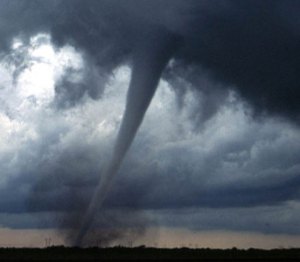 As a resident of tornado alley, there is a summer tradition of dusting off the Twister DVD while scanning the afternoon skies for possible wall clouds. The film takes place in Oklahoma, but was filmed near my current home in central Iowa. The story follows a team of meteorological students and scientists as they attempt to place weather sensors in the path of a tornado to measure readings inside of the storm. After many failed attempts, injuries, and even fatalities, our protagonists successfully launch the sensors and save humanity. Err, save their research. As the flick can also be caught at least three times a week on cable during the summer, I catch up on all of my favorite lines.
Jo: [cow flies by in the storm) Cow.[cow flies by in the storm]Jo: ‘Nother cow.Bill: Actually, I think it was the same one.
The College Student Inventory™ (CSI) from Noel-Levitz allows students to answer questions regarding their strengths and challenges before they even arrive on campus. I ask my incoming students to complete this assessment after summer orientation and use the information to frame our beginning of the year 1:1 appointments. The student and advisor reports are handy for discussion and the group summary reports provide great information for planning our first-year seminar course and programming topics.
MAP-Works® offers a similar tool to discover student transition issues early in the semester. Students develop a personal profile based on their initial campus experience that is measured for potential barriers to success. A web-based report is generated immediately for students and faculty or staff advisors that compares with all first-year students on our campus. Campus resource services are suggested where needed.
The Myers-Briggs Type Indicator® (MBTI®) helps demonstrate theory that there are distinct patterns to individual psychological types even though persons exhibit these patterns in different ways. Helping students to understand their type preferences and how they affect personal learning styles provides a common ground for understanding differences and the transition to college. I provide an MBTI learning styles assessment for each student in our first-year seminar each fall. Students do not always grasp the type concept, but do find meaning from discussion of the transition to university style learning.
It is common knowledge among student affairs practitioners that students enter the college or university with varying degrees of emotional intelligence. Additionally, those familiar with retention issues will cite non-academic challenges as the frequent impetus for student attrition. Assessing emotional intelligence using the EQ-i® allows students to see potential areas for growth that may enhance adaptation and coping skills leading to academic achievement. I find the EQ-i particularly helpful for students seeking direction in their academic or life plan.
While no assessment tool can foresee every difficulty faced by our students on the path to graduation, I have found these tools to be helpful for communication, planning, and advising. Not a certified MBTI or EQ-i user? Check with your human resources office for recommendations.
Have you tried these assessments? Other tools you suggest?
Enjoyed Twister and need a good summer read? Check out The Stormchasers.

Everything that is really great and inspiring is created by the individual who can labor in freedom. ~Albert Einstein

I make a semi-annual pilgrimage to central Colorado to visit family and stare at the awesome wonder of giant mountains. Mostly, I mountain gaze because traveling 7,000 feet into the sky from my home on the plains leaves me sucking wind after a walk across the street. This is Mount Princeton rising 14,197 majestically into the clouds. The view puts things into perspective.
Here are some words of wisdom for your mountain gazing.
Never measure the height of a mountain until you have reached the top. Then you will see how low it was. ~Dag Hammarskjold
To live for some future goal is shallow. It’s the sides of the mountain that sustain life, not the top. ~Robert M. Pirsig
There are many paths to the top of the mountain, but the view is always the same. ~Chinese Proverb
It is not the mountain we conquer, but ourselves. ~Edmund Hillary
Today is your day! Your mountain is waiting. So…get on your way! ~Dr. Seuss
Unlike the hare of Aesop’s Fable lore that mocked and ridiculed the slow tortoise before losing a race to him, the tortoise featured in this video knows what it means to help someone when they are feeling down. Or upside down.
Our work in student affairs, particularly in the first-year, is about up righting students when they need it and giving them a nudge in a new direction. Some days it is not about the race, but instead it is about the journey and who we can help along the way.
Be a tortoise today.
 eighteen and life
