Campus Speaker: Instant Communication

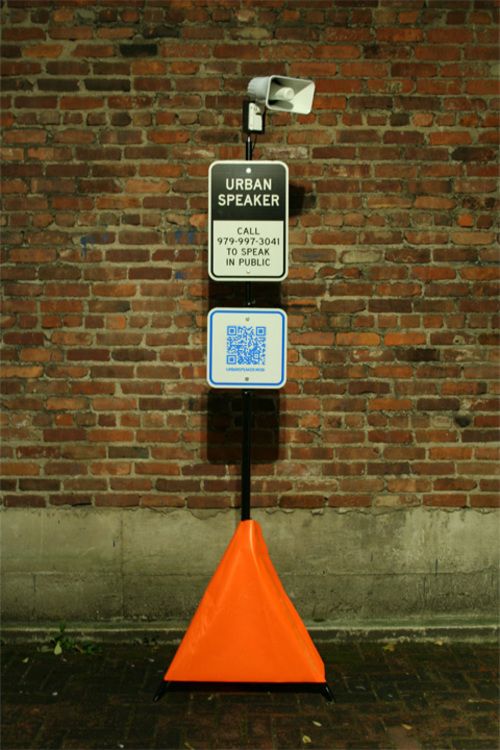
Tom Krieglstein shared a blog post last week featuring this Urban Speaker, an outdoor art installation by Carlos J. Gomez de Llarena.  It was intended to offer an instant stage for public communication.

I shared with a colleague that having my own urban speaker, or Campus Speaker, would be quite handy as my office overlooks a major residence hall thoroughfare.

Things I would share on my Campus Speaker:

Hey, you! Walking through the landscaping! They call it a sideWALK for a reason!

Hey, you! Please use the crosswalk! You are becoming a retention risk!

Yo! You on the motorcycle! SLOW DOWN! This is a residential area!

And today I could add things like, “Congrats to the Cyclone Volleyball team for sweeping Iowa in three sets!”

What would you share on your Campus Speaker?

It’s not only a national debt crisis

Helping students understand how to effectively manage student loan debt is a bit of a project for me. I spend much of my professional work counseling first-generation college students, most of whom have high financial need. I have shared my views on the student debt crisis here, here, and here.

Andrew Hacker and Claudia Dreifus present some excellent alternative plans for lowering student costs in higher education by encouraging students to choose community colleges and state institutions.  And although I disagree with their portrayal of unscrupulous financial aid officers when describing the individuals at my own institution, I do not doubt that they are out there.

The next subprime crisis will come from defaults on student debts, starting with for-profit colleges and rising to the Ivy League. The parallels with housing are striking. In both, the written warnings aren’t understood, especially on penalties and interest rates. And in both, it’s assumed that what’s being bought will rise in value, in one case the real estate, in the other the salaries which will accrue with a degree. One bubble has burst; the second is already losing air.

Future Earnings, Redux

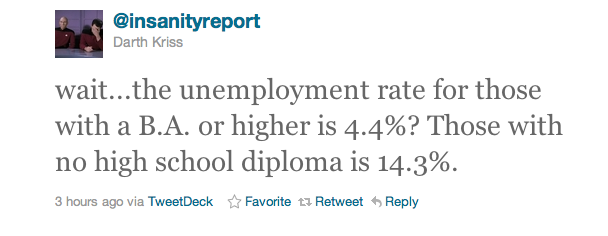
The monthly jobs report was released this morning, It showed that even in our current tough economy, lo and behold, unemployment for those with a college education is considerably below the national averages. Go figure.

Future Earnings

As a student affairs professional and higher education advocate, I am exhausted by recent events discounting the value of a college degree. Yes, I am looking at you, Mr. Stanford Educated Peter Thiel. Thankfully, there are enough critical thinkers in the media who are willing to defend the value of education from stories such as:  Debt-Laden Graduates Wonder Why They Bothered With College.

Why the Media is Always Wrong About the Value of a College Degree

The Long, Sad History Of ‘College Not Worth It Anymore’ Articles

Does College Still Pay?

And my logical thinking favorite:

Where is the Best Place to Invest $102,000–In Stocks, Bonds, or a College Degree?

…the recession has not fundamentally changed the math: although a college degree has upfront costs, it is important to remember that it is an investment that pays off over time.

Success tips for First-Year Students

Contributing writer Erin Leitner with the News Record of the University of Cincinnati came up with 7 Tips for First-year Students to Succeed.  She included wisdom on not stressing over choosing a major.

Don’t stress about picking a major your first year or two. Just because some people know exactly what they want to do from the start doesn’t mean you have to narrow your frame of mind, too.

In your first year or so, take your time and search for your niche. My advice is take classes that you think you may like or think you are good at. If you find that you enjoy them and do well in them naturally then you may be on to something.

Also, try to ask people you admire about their careers and emulate their advice into your life. Don’t limit yourself to just local acquaintances or professors, but don’t ignore them either. Try to contact those unreachable-possible-celebrities whose work might inspire you. They may not answer you, but if they do you will have some golden inspiration.

You could also try to reach the people who directly surround your idol. They are likely the backbone of the individual you are seeking advice from and are usually equally talented and knowledgeable about the career path you are exploring.

I recall switching my undergraduate major during the first and second college year, staying within the same academic department, but choosing a different direction. With the exception of pre-professional programs in architecture and perhaps engineering on my campus, students have the flexibility to give courses a test-drive before committing to a program of study. I counsel students and families that not every 18-year old is ready to declare what they will be doing for the next forty years. Being undecided about a major is not a negative, it’s the active process of making a decision.

Decisions

No trumpets sound when the important decisions of our lives are made. Destiny is made known silently. ~Agnes de Mille

Some weeks in student affairs you make decisions that change students lives. Enrollment decisions, financial decisions, leadership decisions; decisions that have impact and meaning.

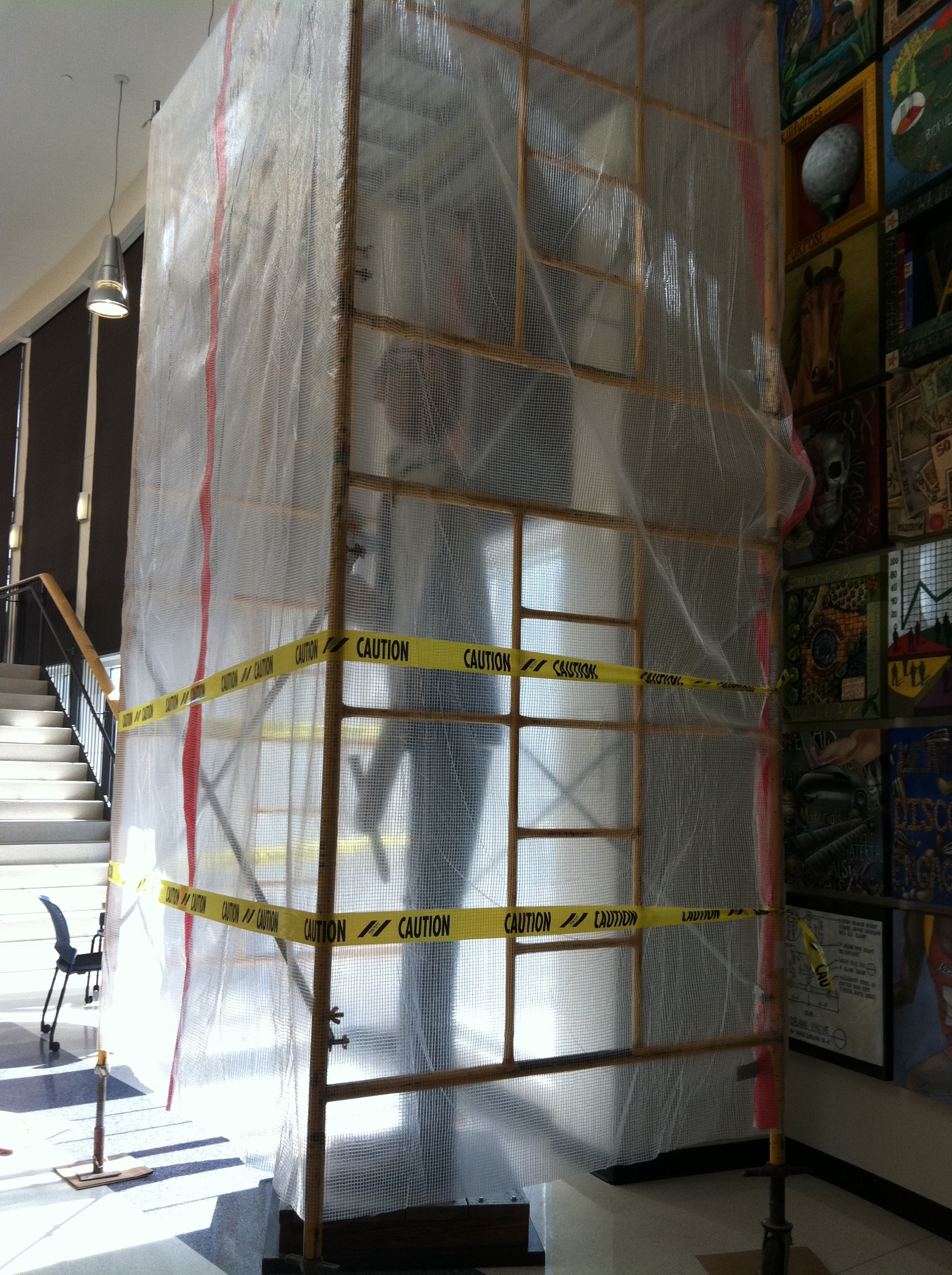
Other weeks, you decide whether the construction crew repairing your building will do more damage moving a twelve-foot tall, one-half ton wooden sculpture or building a safety barrier around it with scaffolding and bubble wrap.

It all evens out.

Student Debt continued: Still no caviar

I have frequently referenced a paper for a higher ed finance class this semester that was featured today in a Los Angeles Times article on the big picture of student debt.

The Institute for Higher Education Policy study of federal student loans, Delinquency: The Untold Story of Student Loan Borrowing, suggests that a majority of students struggle to repay their loans.  As the cost of a higher education has increased exponentially over the last couple of decades, policymakers have relied solely on default rates as a measurement tool.  An institution’s default rates can impact their ability to provide loan borrowing to students.  This study suggests that default rates alone provide an incomplete analysis, as they exclude borrowers who have difficulty repaying their loans but who avoid default.

This study consists of a review of federal student loans only, not private lending.  It focuses on the nearly 1.8 million borrowers who entered into repayment on loans obtained through the Federal Family Education Loan Program in 2005 during their first five years of repayment.  It details the rates at which borrowers entered into default; into deferment, a temporary suspension of loan payments for re-enrollment in school, unemployment, or economic hardship; forbearance, temporary suspensions of a borrower’s payments because of financial difficulty; and delinquency, or late payment on a loan.

Overall, only 37 percent of the borrowers in the study managed to repay their student loans throughout the study period without postponing payments or becoming delinquent. Another seven percent entered into deferment because they re-enrolled in school.  A majority, 56 percent of borrowers, had difficulty making timely payments on their loans.

Of the 56 percent with repayment difficulty, 15 percent of borrowers used deferment and forbearance to postpone their payments and avoid delinquency.  Overall, 41 percent of the student loan borrowers became delinquent or defaulted.  Twenty-six percent of borrowers became delinquent, but did not default.  Approximately 15 percent of borrowers became delinquent and defaulted.

Delinquency and default have serious consequences for student loan borrowers and can affect credit scores and the ability to obtain mortgages and auto loans, and the terms upon which those loans are offered.  Borrowers who default face even more severe consequences, including wage garnishment, withholding of income tax refunds or Social Security benefits, the turning over of the defaulted loans to collection agencies, and liability for collection and court costs.

There were important distinctions made between borrowers.  Undergraduate and graduate borrowers who left school without graduating were far more likely to become delinquent or default than those who graduated.  Graduate students were far more likely to make timely payments without using deferment or forbearance and less likely to become delinquent or to default than undergraduates.  Students at public four-year and private, nonprofit four-year institutions were more likely to repay their loans on time without resorting to deferment or forbearance and less likely to default on loans.  Students at public and for-profit two-year institutions and for-profit four-year institutions were the most likely to experience repayment difficulty.
Student Debt: No new car, caviar, four star daydream

I have been reading a lot on student debt recently, a topic that is of great interest for me as I counsel first-generation college students. My state and institution have among the highest debt rates in the country, not a statistic to celebrate.

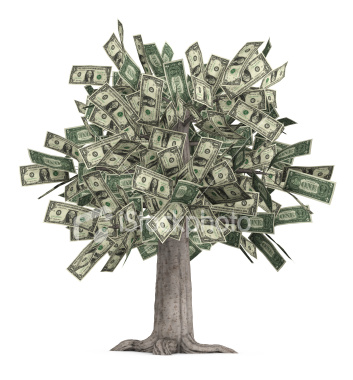
Student Debt and the Class of 2009 is the fifth annual report from the Project on Student Debt.  It includes cumulative loan debt of students from public and private nonprofit colleges and shows that the debt level of students who graduate with student loans continues to rise with averages from $13,000 to $61,500. Low debt states are typically in the West or Southern states. High student debt rates are concentrated in the Northeast with Iowa, Minnesota, and Alaska in the top tier as exceptions. Iowa is fourth in the nation for average debt of $28,883 and second in percentage of graduates with debt, at 74%.

A variety of factors contribute to varying debt levels including cost of tuition and fees and financial aid policies of the individual institution. Generally, higher tuition is found at private colleges, but some privates, such as Cal Tech and Princeton, are also the first to institute policies of no-loan or reduced-loan for low- and middle-income students. Student debt figures are not inclusive in that not all colleges reported figures for average debt and percent with debt. In actuality, the debt figures could be and are likely much higher.

Several issues influence the accurate collection of student debt data and are recommended for improving the scope this information. These include a lack of a comprehensive annuals source of data, data on private loans, and lack of reporting on repayment terms and debt-to-income ratios for graduates in repayment.

Student Debt and the Class of 2009 reports only federal loan data. When you consider that debt attributed to private and federal student loans has surpassed $884 billion dollars in the United States and contributes to the ballooning national debt, the effectiveness and equity of relying on student loans to finance the cost of a higher education becomes paramount to all. Lawmakers and institution officials must carefully consider the impact of their tuition decisions and educate the student population as to their debt responsibility.

Little things

Some days it’s the little things. Like discovering that you packed extra underwear when weather delays your travel leaving you stranded far from home. Or when you get an email out of the blue from a student you have not heard from in a while.

I’m writing to thank you and the Hixson program for all that you have given me.  Not just the class, the opportunity to be a seminar leader or the scholarship money, but also the staff. Yesterday, I was in the student lab doing a little homework when your graduate assistant came in and I had a really great talk with him, just about how our semesters were going.  Anyway, it makes me really appreciate the program and especially the people surrounding the program.


image by Charles M. Schulz

Resiliency in Student Affairs

Any individual who has dedicated more than a couple of years to a career in Student Affairs understands the power of resiliency. I was reminded of this during our weekly discussion with the Student Affairs Collaborative on the topic of “Duties as Assigned”.

In student affairs, evening and weekend duty are par for the course. Emergency calls and student crises in the middle of the night are routine. In my own career, I have had my position eliminated during financial challenges and once endured seven different supervisors over a five-year span. I have mourned the loss of students, including one killed on campus by a drunk driver (another student). And of course, I have juggled work commitments while spending time away from my family.

Dr. John Grohol writes about 5 Steps to Building Resiliency. He provides great tips for growing your own reservoir of resilience.

  1. Resiliency Means Accepting that All Things are Temporary
  2. Self-Aware People are Resilient People
  3. (Some) Adversity Helps You
  4. Our Social Relationships Bolster Us
  5. Goal Setting and Understanding Your Problems is Important

Student affairs professionals must be resilient to grow, advance and succeed in this field. This same resilience allows us to serve our students when they may be struggling. As you examine your strengths in preparation for an evaluation or interview, be certain to include the resiliency traits that you bring to the table.

Happiness is not the absence of problems but the ability to deal with them. ~H. Jackson Brown