Creating Conditions for Good Company

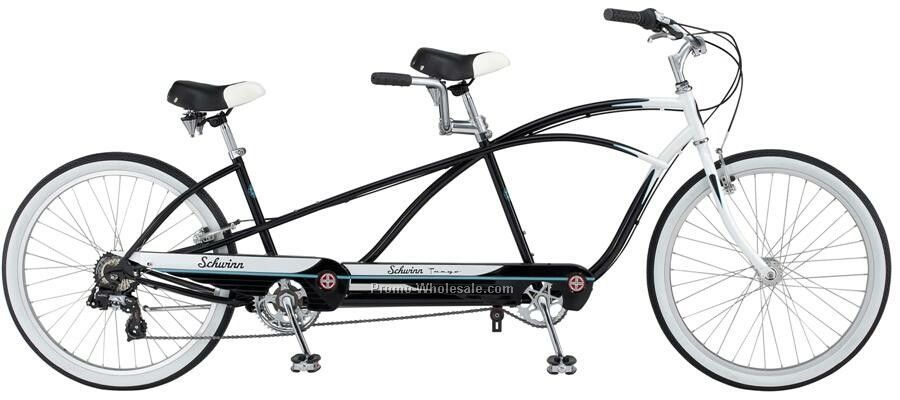
Schwinn-Tango-Tandem-Unisex-Bicycle_20090621496

My opportunity to teach a graduate course in Student Development Theory has been incredibly rewarding. I have enjoyed exploring Erickson, Chickering, Baxter Magolda, and the other tenets of our work with an enthusiastic group of up and coming student affairs professionals. We will wrap up the semester with an intensive look at the journey of self-authorship. The student affairs role in this journey, of becoming good company in the transformation of our students, defines my own practice.
Peggy Meszaros shares this excerpt describing her Learning Partnerships Model:
It is important to have a good understanding of the model, and I offer a simple metaphor to help in visualizing it. To fully understand the Learning Partnerships Model [and the student affairs role in self-authorship], think about a journey you may be planning. You will need some form of transportation, a road map with signs along the way to guide your journey, and a final destination. Now visualize your mentoring transportation as a tandem bicycle. There is a rider on the front, the student, who decides the direction and is in charge of making decisions. The rider on the back is you, the teacher or student affairs professional, who stokes the bike, providing challenge and support for the student on the front. You provide the elements of challenge and support in your teaching and (you might picture them as the saddlebags for the journey). Keeping challenge and support in balance as the student heads in the direction of self-authorship is part of your role and a key element of the model. The guideposts are found as students move from absolute knowing, the first marker; through transitional or independent knowing, the second marker; to contextual knowing, the final destination.
How do you provide good company?

. . . . .

Meszaros, P. (2007). The journey of self-authorship: Why is it necessary? New Directions for Teaching and Learning, 109, p. 5-14. doi: 10.1002/tl.261

Defining our work in student affairs

Nevitt Sanford is one of my favorite student affairs theorists. Sanford’s (1967) theory on student development was based upon providing a balance of challenge and support. Too much support with too little challenge creates a cushy environment for the student, where development is unlikely to occur. However, the opposite of too little support with too much challenge also makes development an impossible and negative experience.

Sanford was a political and social psychologist and instrumental in defining how prejudices and racism are defined early in childhood. His The Authoritarian Personality is a classic work in understanding the issues behind the Holocaust. Sanford engaged in a decade long academic freedom lawsuit with the University of California when he refused to sign a loyalty oath during the McCarthy era.

If we could punish people with extremely unpopular opinions then we could silence people with less unpopular opinions.  ~Nevitt Sanford

It was Sanford’s work in student development theory that defines my philosophy for student affairs. Sanford pushed for colleges and universities to provide access and service to those for whom higher education may be out of reach. He challenged us to consider what education would look like if colleges enrolled students whom they could help the most, rather than compete for the students who boosted academic rankings and visibility.

What theorist or theory defines your work in student affairs?

Sanford, N. (1950). The authoritarian personality. New York, NY: Harper.

Sanford, N. (1967). Self & society: social change and individual development. New York, NY: Atherton Press.

The hard is what makes it great (Part II)

As we take big leaps, it is important to remember…

It’s supposed to be hard.

If it wasn’t hard, everyone would do it.

The hard is what makes it great.  ~A League of Their Own

What is your 5-year plan?

Screen Shot 2013-10-27 at 6.19.17 PMHappy 5th Anniversary to the eighteen and life blog! Thank you for popping in now and again to see what is on my mind and for offering words of encouragement. As I think back over the last half decade, I smile to think of the new friends in my life and the completion of major projects.

For your reading pleasure, I have gathered a few articles that you may have missed over the last week.

University of Kentucky using student data analytics to improve retention rates.

SMU created this video on why to consider a grad program in higher ed. 

Interesting piece on class-sourcing as a teaching strategy.

A study showing that college faculty are increasingly using social media.

Brutalist architecture style on college campuses.

Twitter becoming more popular with teenagers.

PS. Also, wishing Happy 1/2 Birthday to my dear daughter!

This week’s interesting reads…

Articles that I have found myself returning to several times over the past few days. I hope that you find them interesting as well. Read on.

26 Types of Blog Posts

Our Sphere of Control in a Student Affairs World

5 Ways White Feminists Can Address Our Own Racism

The Myers-Briggs Assessment is No Fad

The MBTI–My Most Valid Tool

11 Tips to Keep iOS7 From Destroying Your Battery Life

I Don’t Want Tim Wise As An Ally. No Thanks.

Laws of Physics and College Transition

tiltawhirl

There is an amusement park near my home that has one of those lose your lunch inducing rides that spin faster and faster until the floor drops out. It leaves you stuck to the wall until the ride slows and you gradually resume your footing on solid ground. The science of this phenomenon is centrifugal inertial force.

My university is welcoming 4,356 6,000+ new students to campus as we begin the fall semester; colleges across the country are welcoming thousands more. Imagine the inertial force as these students navigate classes, new roommates, and campus cultures that are frequently in contrast to their personal experiences.

Now, imagine your campus as a giant spinning disk with a student planted firmly in place by centripetal force, moving along the curved path of the disk, going with the flow. All is fine as the student survives residence move-in, deciphers a schedule, and maneuvers the dining center. But soon the campus disk is spinning faster and the centrifugal inertial force can become greater than the centripetal friction force holding the student in place. A failing quiz grade, roommate argument, financial difficulties or homesickness can all be triggers to send our students flying right off the college ride.

As we in student affairs greet our new students and those who are returning, it is important that we keep these laws of physics in mind. Know what resources you have available to address student concerns. Advocate for your students when university networks are difficult to follow. Listen carefully for clues that a student may be struggling.

Understanding F = mv2/r may just graduate a student.

This post first appeared on eighteen and life on August 23, 2010.

Like a Box of Chocolates

box-of-chocolates-2

How do you define your work in student affairs?

Like many of my colleagues in student affairs, my first job in the profession was the result of a student leadership experience, student tour guide to be exact. My work as an undergraduate admissions ambassador led to a position as an admissions recruiter for a small private college. Working in admissions, helping students with their college decision-making, I honed facilitation skills that are critical to my current job. I had a couple of gigs as a director of admissions before turning my sights to program coordination.

Stanford professor Robert Sutton suggests employees need predictability, understanding, control, and compassion. As anyone who has spent even a few months in a student affairs position can tell you, those items are few and far between. You learn early in your career that student affairs hours include nights, weekends, and other duties as assigned. The concerns of the 18-year old college student differ from year to year. Reactions to course assignments or program activities may not communicate their message or be perceived as useful. Faculty and academic units question the value of student affairs programming and services, particularly in challenging financial times. Student affairs professionals do, however, provide predictability, understanding, control, and compassion… for our students.

The graduate assistants who have worked in my unit over the years have enhanced my work and life. They went from grad to pro and are now high school teachers, logistics managers, academic advisors, independent consultants, and campus activity coordinators. Each of these individuals had an opportunity to make a difference in student lives. They used their creativity, energy, and enthusiasm to make our university a better place for students. When I think of my colleagues at the Student Affairs Collaborative, you may find us in campus activities, student union management, leadership development, residence life, career planning, scholarship programs, and consulting. Those titles do not include the personal counseling, financial advising, academic enhancement, and other duties as assigned that we provide on a daily basis.

I borrowed the title for this post from a former graduate assistant who is now blazing trails of her own. She used the analogy that Student Affairs is like a box of chocolates for a course assignment and the concept stuck with me.

Student Affairs is:

  • Being a generalist in helping, listening, organizing, and facilitating, while a specialist in your position.
  • Never growing old as you surround yourself with 18-22 year olds.
  • Spending your life by the academic year calendar.
  • Justifying your existence with the belief that higher education is also about the out-of-classroom experience.
  • A real profession.

Student Affairs professionals work hard to make our colleges and universities more welcoming and engaging for students because we believe in higher education and all that it offers. We get up every morning and face the day with a smile, because we never know what we’re going to get.

This post first appeared on eighteen and life on January 17, 2010.


Resiliency in Student Affairs

Any individual who has dedicated more than a couple of years to a career in Student Affairs understands the power of resiliency. I was reminded of this during a weekly discussion with the Student Affairs Collaborative on the topic of “Duties as Assigned”.

In student affairs, evening and weekend duty are par for the course. Emergency calls and student crises in the middle of the night are routine. In my own career, I have had my position eliminated during financial challenges and once endured seven different supervisors over a five-year span. I have mourned the loss of students, including one killed on campus by a drunk driver (another student). And of course, I have juggled work commitments while spending time away from my family.

Dr. John Grohol writes about 5 Steps to Building Resiliency. He provides great tips for growing your own reservoir of resilience.

  1. Resiliency Means Accepting that All Things are Temporary
  2. Self-Aware People are Resilient People
  3. (Some) Adversity Helps You
  4. Our Social Relationships Bolster Us
  5. Goal Setting and Understanding Your Problems is Important

Student affairs professionals must be resilient to grow, advance and succeed in this field. This same resilience allows us to serve our students when they may be struggling. As you examine your strengths in preparation for an evaluation or interview, be certain to include the resiliency traits that you bring to the table.

Happiness is not the absence of problems but the ability to deal with them. ~H. Jackson Brown

This post first appeared on eighteen and life on February 1, 2011.

Resilience: The New Skill

090411resilience

Anyone who has built a career in student affairs understands the power of resiliency. This article shared by my fellow seasoned professional Deb Schmidt-Rogers reminds us that the ability to bounce back is essential, particularly as we consider our work. How is your ability to grow through failure? How do you respond when things go wrong? Here are a few of my favorite articles on the topic.

Surprises Are the New Normal; Resilience Is the New Skill

Resilience: How to Build a Personal Strategy for Survival

Building Resilience

It’s a Post-Doc Life (Part II): Tips and Advice

Part II of It’s a Post-Doc Life is a bit of wit, wisdom, and advice for friends and other doctoral students approaching the writing phase. See Part I if you require more introduction.

Contract with an editor in advance. Determine mutual expectations for the process. I hired an editor late in my writing process at the advice of fellow doc students in my cohort and did not have adequate editing time built into my writing calendar. I thought my editor could be working on edits for Chapters 1-3 while I put the finishing touches on my final chapters. Wrong. My editor required everything in advance so as to get a feel for the entire topic. The substantial amount of tables required extra time including several horizontal pages that were incredibly ornery for pagination. Fortunately for me, my editor was patient and well versed in the requirements of our graduate college.

Make every paper support your analysis. My faculty was supportive in allowing personal research for final projects for students who had a concrete research topic. For a qualitative research class, I redesigned my quantitative topic as a case study. For program evaluation, I reviewed how my research study would contribute to program enhancement. For statistical research, I focused on a test sample of my population for the final project and was later able to refine and submit that work as my capstone. Each of these papers shaped and enhanced my final project.

Keep your focus. Post your dissertation questions where they are clearly visible at your workspace. Even on days where no writing is accomplished, reading and processing your questions is progress. I kept a list reminding me to be positive right next to my research questions. I created Pinterest pages on focus and finishing. This may seem like procrastination, but they provided good left-brain alternatives to statistical writing. Blogging also helped.

Read dissertations. I read as many dissertations related to my topic as I could locate and found off-topic examples that had been highly praised by my department. Knowing what your faculty recognizes as good research is a great motivation and resource.

Feed your brain. Skittles and pretzels are not brain or body food for any length of time. Thank goodness I was guzzling green tea. Any semblance of a healthy diet or exercise program that I had prior to writing went out the window. In its place were the bits of time that I reserved to maintain normalcy for my family, a stolen few hours for a soccer game or baking cookies. My muscles suffered from constant sitting and I made many adjustments to my workspace. I am working hard to regain a healthier self.

Take some personal time following your defense. Immediately following my dissertation I was engaged in a campus conference then traveled away for another conference before moving into the busiest weeks of my spring semester. I struggled to quickly revise my project for an article submission, submit my final work to the grad college, sign up for commencement, and close our programs for the semester. I had little time for myself with the exception of a mani/pedi and a bit of shopping. And I was exhausted.

Don’t be surprised by Post-Dissertation Stress Disorder or PDSD. Unlike many post-docs, I was lucky to already have a wonderful job in student affairs. Although I am researching and entertaining next career steps, I already have a salary and satisfying work to wake up for each day. However the lack of deadlines, lack of pressure, decreased ability to function in the normal, and deadlines that are suddenly manageable is surprisingly stressful. A professor recently described it as similar to retirement. For my fellow doc moms out there, it’s like having a baby, but nothing to cuddle with post-delivery. If you are work and project driven, the adjustment takes time.

Don’t sweat the small stuff. There will be errors in your final submission. I have found two so far, just minor things, but our grad college does not allow corrections after submission. Although incredibly frustrating, I will live. You will too.