Throwing Rochambeau and logical thinking

Breanne Harris posted this gem at her Critical Thinkers blog and it made me laugh out loud on a day filled with the grumbling of a final research paper. I am posting the text here to remind myself that there is nothing wrong with my logical ENTJ thinking processes.

Let’s throw for it.

I understand that Scissors can beat Paper, and I get how Rock can beat Scissors, but there’s no way Paper can beat Rock. Paper is supposed to magically wrap around Rock leaving it immobile? Why can’t Paper do this to Scissors? Screw Scissors, why can’t Paper do this to people? Why aren’t sheets of college-ruled notebook paper constantly suffocating students as they attempt to take notes in class? I’ll tell you why, because Paper can’t beat anybody, a Rock would tear it up in two seconds. When I play Rock Paper Scissors, I always choose Rock. Then when somebody claims to have beaten me with their Paper, I can punch them in the face with my already clenched fist and say, “Oh sorry, I thought paper would protect you.”

Choose another street

I enjoy finding forgotten resources while organizing my computer files on a rainy Friday afternoon.

AUTOBIOGRAPHY IN
FIVE SHORT CHAPTERS
_________________________________

From There’s a Hole in My Sidewalk
By Portia Nelson

I.
I walk down the street.
There is a deep hole in the sidewalk.
I fall in.
I am lost … I am helpless.
It isn’t my fault.
It takes forever to find a way out.

II.
I walk down the same street.
There’s a deep hole in the sidewalk.
I pretend I don’t see it
I fall in again.
I can’t believe I am in the same place.
But it isn’t my fault.
It still takes a long time to get out.

III.
I walk down the same street.
There is a deep hole in the sidewalk.
I see it is there.
I still fall in. It’s a habit.
My eyes are open.
I know where I am.
It is my fault. I get out immediately.

IV.
I walk down the same street.
There is a deep hole in the sidewalk.
I walk around it.

V.
I walk down another street.

Decisions

No trumpets sound when the important decisions of our lives are made. Destiny is made known silently. ~Agnes de Mille

Some weeks in student affairs you make decisions that change students lives. Enrollment decisions, financial decisions, leadership decisions; decisions that have impact and meaning.

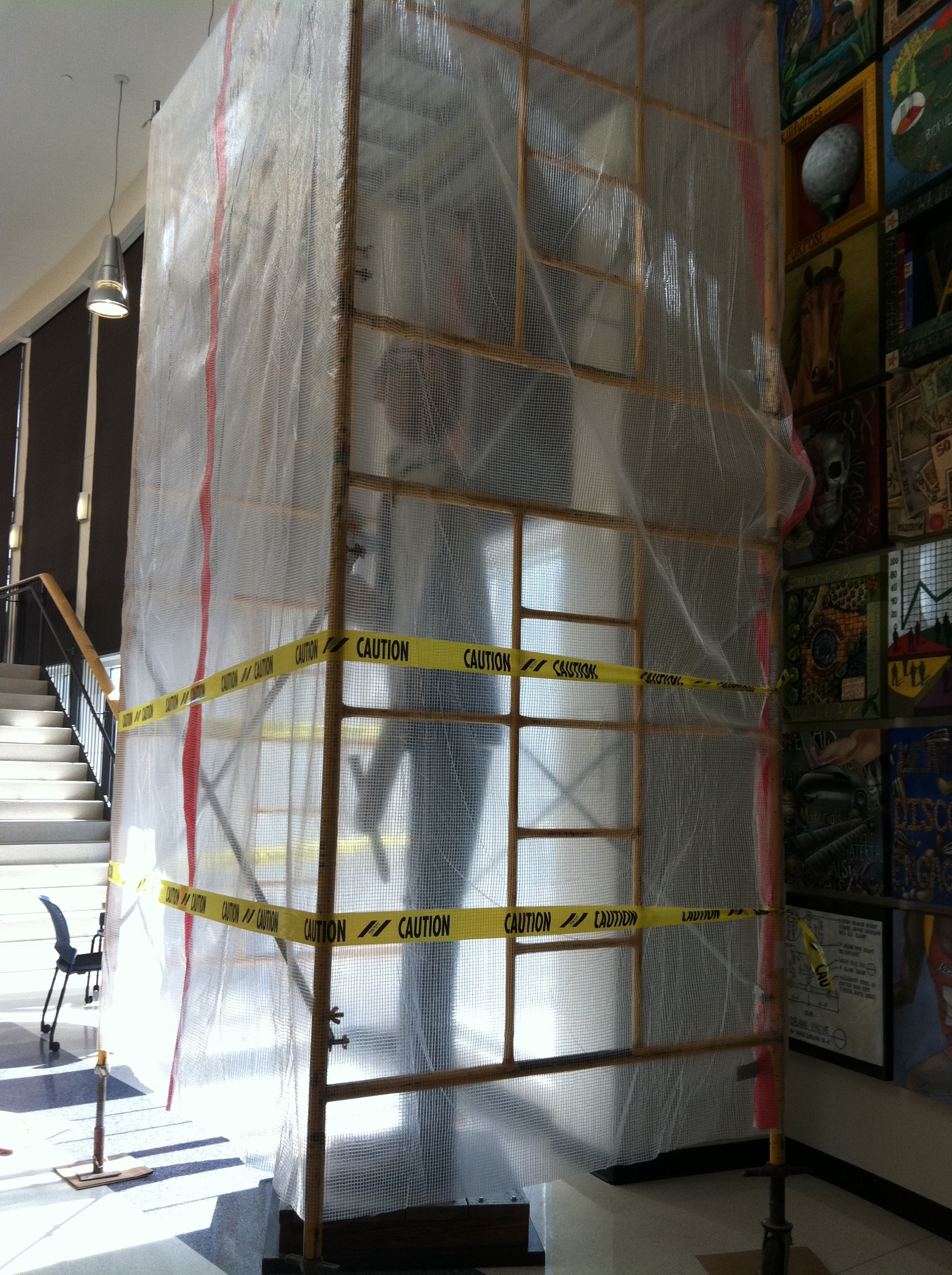
Other weeks, you decide whether the construction crew repairing your building will do more damage moving a twelve-foot tall, one-half ton wooden sculpture or building a safety barrier around it with scaffolding and bubble wrap.

It all evens out.

Resiliency in Student Affairs

Any individual who has dedicated more than a couple of years to a career in Student Affairs understands the power of resiliency. I was reminded of this during our weekly discussion with the Student Affairs Collaborative on the topic of “Duties as Assigned”.

In student affairs, evening and weekend duty are par for the course. Emergency calls and student crises in the middle of the night are routine. In my own career, I have had my position eliminated during financial challenges and once endured seven different supervisors over a five-year span. I have mourned the loss of students, including one killed on campus by a drunk driver (another student). And of course, I have juggled work commitments while spending time away from my family.

Dr. John Grohol writes about 5 Steps to Building Resiliency. He provides great tips for growing your own reservoir of resilience.

  1. Resiliency Means Accepting that All Things are Temporary
  2. Self-Aware People are Resilient People
  3. (Some) Adversity Helps You
  4. Our Social Relationships Bolster Us
  5. Goal Setting and Understanding Your Problems is Important

Student affairs professionals must be resilient to grow, advance and succeed in this field. This same resilience allows us to serve our students when they may be struggling. As you examine your strengths in preparation for an evaluation or interview, be certain to include the resiliency traits that you bring to the table.

Happiness is not the absence of problems but the ability to deal with them. ~H. Jackson Brown


Design Thinking and Learning

In a seminar course required of students in my doctoral program, we spent a  day on problem solving and creativity. Professor John Nash took us through an  exercise that originated with the Stanford d.school where we used problem  solving and then design thinking to create the perfect wallet for a student  partner.

Our exercise included:

  • Interviewing a partner to engage them and gather insights about wallet use
  • Defining and articulating a point of view based on the interview insights
  • Sketching new alternatives based on the point of view
  • Testing ideas with our partner to gather feedback
  • Acting on the feedback and building a wallet prototype from art supplies

This was a fun exercise that I think can be adapted for use with student leaders  to encourage bigger picture thinking and processing. You can read more about  the exercise and view a student interview at Nash’s blog.

Laws of Physics and College Transition


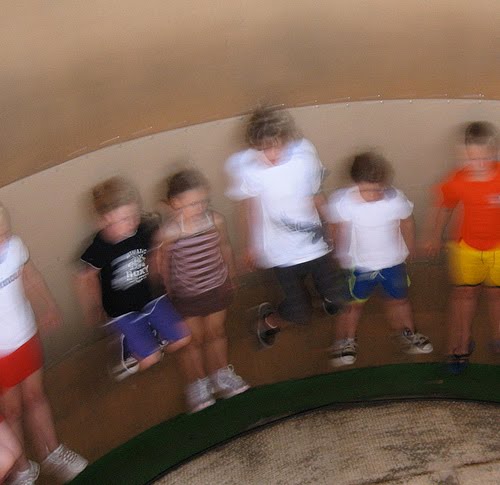
There is an amusement park near my home that has one of those lose your lunch inducing rides that spin faster and faster until the floor drops out. It leaves you stuck to the wall until the ride slows and you gradually resume your footing on solid ground. The science of this phenomenon is centrifugal inertial force.


My university is welcoming 4,356 new students to campus as we begin the fall semester; colleges across the country are welcoming thousands more over the next few weeks. Imagine the inertial force as these students navigate classes, new roommates, and campus cultures that are frequently in contrast to their personal experiences.

Now, imagine your campus as a giant spinning disk with a student planted firmly in place by centripetal force, moving along the curved path of the disk, going with the flow. All is fine as the student survives residence move-in, deciphers a schedule, and maneuvers the dining center. But soon the campus disk is spinning faster and the centrifugal inertial force can become greater than the centripetal friction force holding the student in place. A failing quiz grade, roommate argument, financial difficulties or homesickness can all be triggers to send our students flying right off the college ride.

As we in student affairs greet our new students and those who are returning, it is important that we keep these laws of physics in mind. Know what resources you have available to address student concerns. Advocate for your students when university networks are difficult to follow. Listen carefully for clues that a student may be struggling.

Understanding F = mv2/r may just save a student.


Worth the Price of Admission?

I never expect to see perfect work from an imperfect man. ~Alexander Hamilton

Middlesex University (U.K.) was in the news this week for falsely sending 2,500 admission acceptance letters to students who had not yet been accepted. I began my student affairs career as an enrollment services professional, serving as director of admissions for two small private colleges. On several occasions, I likely admitted a student that never should have been in college. I am not perfect. But I am certain that I never mistakenly notified 200 students or 29,000 students that they were admitted to college. Our students deserve better.


Transition to College

Jacques Steinberg shared gems of wisdom for soon-to-be first-year college students in The Choice column with Advice on the Transition From Applicant to College Student. It included a recommendation from my friend, W. Houston Dougharty, who advises students to live in the moment and less in their social media updates.


As frequently happens in columns such as this, the best words of counsel came from experienced students who remind first-years to treat college like a full time job and learn to do their own laundry.


Climb Every Mountain


I make a semi-annual pilgrimage to central Colorado to visit family and stare at the awesome wonder of giant mountains. Mostly, I mountain gaze because traveling 7,000 feet into the sky from my home on the plains leaves me sucking wind after a walk across the street. This is Mount Princeton rising 14,197 majestically into the clouds. The view puts things into perspective.

Here are some words of wisdom for your mountain gazing.

Never measure the height of a mountain until you have reached the top. Then you will see how low it was. ~Dag Hammarskjold

To live for some future goal is shallow. It’s the sides of the mountain that sustain life, not the top. ~Robert M. Pirsig

There are many paths to the top of the mountain, but the view is always the same. ~Chinese Proverb

It is not the mountain we conquer, but ourselves. ~Edmund Hillary

Today is your day! Your mountain is waiting. So…get on your way! ~Dr. Seuss